October 18, 2026
Maternity Leave in Kuwait: 2026 Private Sector Guide for HR

Content Writer

When an employee requests maternity leave in Kuwait, HR has to protect her statutory entitlement while arranging payroll, the handover and staffing cover. Article 24 of Kuwait Labour Law No. 6 of 2010 is the starting point.
It is not the often-repeated idea that leave must be split into 30 days before birth and 40 days after. This guide explains what the Kuwait labor law actually says about maternity leave and the practical steps private-sector employers should take.
Your workforce plan and your hiring platform, connected.
Elevatus lets you define approved manpower and available vacancies, and track recruitment requisition approvals in real time.
Request a demoKey takeaways:
- Maternity leave in Kuwait is 70 days of paid leave under Article 24 of Law No. 6 of 2010. It is separate from other leave, and the birth must fall within the 70-day period. The law sets no fixed 30/40 split.
- Extra time off is unpaid and discretionary. After maternity leave, the employer may grant up to four months of unpaid leave to care for the child, at the employee’s request.
- Protection continues after the birth. Employers cannot terminate an employee during maternity leave or because of a medically certified pregnancy-related illness, and returning mothers get two hours a day for breastfeeding (Article 25).
How Long Is Maternity Leave in Kuwait?

Maternity leave in Kuwait is 70 days of paid leave under Article 24 of Kuwait Law No. 6 of 2010. The leave is not counted against the employee’s other leave, and childbirth must occur during the 70-day period. The law does not prescribe a fixed split between days before and after delivery.
| Element | Rule under Article 24 |
| Length of maternity leave | 70 days |
| Pay | Paid leave |
| Timing condition | Delivery must happen during the 70-day period |
| Effect on other leave | Not included within the employee’s other leave |
| Optional extension | Up to 4 months without pay, at the employer’s discretion |
| Termination | Prohibited during maternity leave |
Official source: Kuwait Law No. 6 of 2010, ILO NATLEX English translation
How to Calculate the 70-Day Maternity Leave Period
Start from the planned first day of leave and count a continuous 70-day period, making sure the expected delivery falls within it. For example, leave starting on 1 March would ordinarily run for 70 calendar days, through 9 May.
Confirm your organization’s counting method and the employee’s circumstances before issuing dates. Do not automatically divide the entitlement into fixed prenatal and postnatal blocks.
Does Kuwait Labor Law Require 30 Days Before and 40 Days After Delivery?
No. A fixed 30/40 split does not appear in Article 24. Some secondary summaries use that formula, but employers should not present it as the statutory wording.
Check individual dates against the law, and take legal advice when an unusual delivery timeline creates uncertainty.
Is Maternity Leave Paid in Kuwait?

Yes. Article 24 grants paid maternity leave in Kuwait. The English translation does not set a separate percentage calculation, so payroll teams should confirm the wage basis against the authoritative Arabic text and current local advice before stating a precise payroll formula.
Record the maternity period as its own paid leave entry, separate from any unpaid leave.
Does Maternity Leave Reduce Annual Leave in Kuwait?
No. Article 24 states that the 70 days are not included within the employee’s other leave, so maternity leave and annual leave must be tracked as separate categories.
Under Article 70, private-sector employees are entitled to 30 days of paid annual leave a year, available in the first year after nine months of service. A request to add annual leave before or after maternity leave should go through the normal annual-leave rules and approval process. HR teams should keep separate balances for:
- Maternity leave: 70 days, paid (Article 24).
- Annual leave: 30 days a year, paid (Article 70).
- Unpaid childcare leave: up to 4 months after maternity leave, if the employer approves (Article 24).
- Iddah leave: four months and ten days on full pay for a Muslim employee whose husband dies, or 21 days for a non-Muslim employee (Article 77).
Can Maternity Leave Be Extended in Kuwait?

Yes, but only as unpaid leave and only if the employer agrees. Article 24 allows an employer, at the employee’s request, to grant up to four months of unpaid leave after maternity leave so she can care for her child.
The wording is discretionary. It is not an automatic right to four extra months, and it is not paid. HR should get a written request, confirm the approval decision, and record the unpaid period and the new return date. If you have already hired temporary cover, extend that backfill position to match.
Can an Employer Terminate an Employee During Maternity Leave in Kuwait?
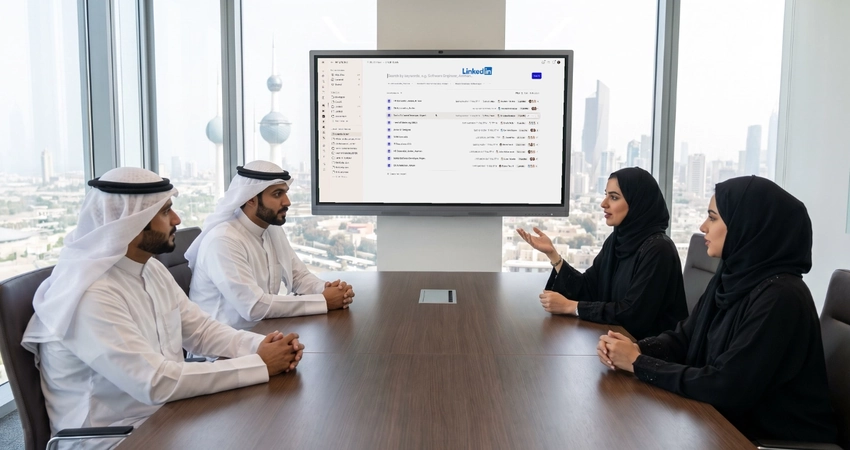
No. Article 24 prohibits an employer from terminating a female employee’s service while she is on maternity leave. It also protects an employee who is absent because of an illness that a medical report shows arose from pregnancy or childbirth.
Escalate any proposed employment action involving pregnancy-related absence for specialist review, rather than handling it as an ordinary attendance or termination case. General Kuwait labor law questions about termination, resignation and indemnity are broader issues and should not be confused with this specific maternity protection.
Breastfeeding Breaks and Workplace Day Care in Kuwait

Under Article 25 of the private-sector law, a returning employee is entitled to two hours during official working hours to breastfeed her child, on terms set by ministerial decision.
Agree the arrangement with the employee, her line manager and payroll, and check the implementing rules before fixing a daily schedule.
When Kuwaiti Employers Must Provide a Day Care Center
The law also requires an employer to arrange a day care center for children under four once its workforce passes set thresholds: more than 50 women, or more than 200 employees in total.
HR should confirm the current implementing requirements and whether an existing childcare arrangement meets them.
Who Qualifies for Maternity Leave in Kuwait?

Any female employee covered by Law No. 6 of 2010, the Kuwait private-sector labor law. The maternity provisions apply to female workers and do not distinguish between Kuwaiti and expatriate employees, so an employer should not refuse maternity leave because a worker is an expatriate. Nationality does matter when you hire cover, because Kuwaitization requirements set quotas for Kuwaiti nationals in the private sector.
Check the individual’s employment category and contract first. Government and civil-service employees work under a different framework and should not be assessed with this private-sector guide alone. Domestic workers and other specially regulated groups may also need a separate review.
Is There Paternity Leave in Kuwait?

Kuwait’s private-sector labor law does not establish a general statutory paternity leave entitlement. Article 24 of Law No. 6 of 2010 specifically addresses maternity leave for female employees and does not extend those benefits to fathers.
However, employers may offer paternity leave as part of their internal HR policies or employment contracts. HR teams should review the applicable legal framework, employment agreements, and company policies before confirming an employee’s leave entitlement.
How HR Should Manage Maternity Leave in Kuwait Step by Step

A consistent process protects the employee’s rights and prevents avoidable staffing gaps. The steps below keep legal leave administration separate from the recruitment decisions needed to cover the role.
Step 1: Confirm Eligibility and the Proposed Leave Dates
Check the employee’s employment category, collect the relevant medical information through a confidential process and document the proposed 70-day period. Confirm that the expected delivery date falls within it.
Step 2: Prepare Payroll and Leave Records
Create a separate paid maternity leave entry, keep annual-leave balances intact and brief payroll on the expected period. Restrict sensitive health information to authorized staff.
Step 3: Document Any Extension Request
If the employee asks for childcare leave after maternity leave, record the requested length, the approval decision, the unpaid status and the updated return date. Do not assume the four-month maximum is granted automatically.
Step 4: Arrange Temporary Staffing Cover
Map critical duties and decide whether the work can be redistributed or needs a fixed-term cover hire, then get the approvals. Treat it as a fixed-term role with a clear scope, handover owner and realistic end date.
Check nationalization quotas before hiring, since nationalization ratios move every time someone joins or leaves. Building cover into workforce planning in Kuwait makes these absences predictable rather than urgent.
Step 5: Plan the Employee’s Return
Hold a return-to-work conversation, set up breastfeeding breaks under the applicable rules and update the manager’s schedule without prejudicing the employee’s protected rights.
Central or branch-level hiring, one system.
Elevatus lets you manage recruitment centrally from headquarters or let regional and branch teams manage their own hiring needs, in one governed system.
Request a demoHow Recruitment Technology Supports Maternity Cover Planning in Kuwait

Planning maternity leave cover can create additional recruitment demands for HR teams, particularly in large organizations where hiring involves multiple stakeholders and approval stages.
Elevatus, the Agentic AI Hiring Operating System, helps enterprises and government organizations streamline recruitment through agentic AI candidate screening, structured hiring workflows, and centralized recruitment management.
For employers in Kuwait arranging temporary maternity cover, Elevatus can support the recruitment process by helping HR teams evaluate candidates, coordinate hiring through enterprise recruitment workflows, and maintain visibility throughout the selection process.
This allows organizations to approach replacement hiring in a more structured and efficient way while keeping recruitment decisions in the hands of their HR teams.
Elevatus focuses on recruitment, not maternity leave administration. Employers remain responsible for managing leave entitlements, payroll, and compliance with Kuwait’s labor laws.
Maternity Leave in Kuwait vs Saudi Arabia
Employers operating in both markets should not reuse one leave template. The table gives a high-level comparison, and our guide to maternity leave in Saudi Arabia covers the Saudi rules in full.
| Comparison | Kuwait private sector | Saudi private sector |
| Standard paid leave | 70 days (Law No. 6 of 2010, Article 24) | 12 weeks (Labor Law, Article 151) |
| Timing | Delivery must occur during the 70-day period, with no fixed 30/40 split | Six weeks after birth are mandatory, the other six are flexible |
| Extension | Up to four months unpaid, at the employer’s discretion on request | One extra unpaid month, plus extra leave for a sick or special-needs child |
| Breastfeeding | Two hours a day (Article 25) | Up to one hour a day (Article 154) |
| Scope | Private-sector law, civil service separate | Saudi Labor Law employment scope |
According to the Central Statistical Bureau’s Labor Market Information System, 501,162 women were employed in Kuwait’s government and private sectors as of 31 March 2026, including 247,429 Kuwaiti women and 253,733 non-Kuwaiti women. With a female workforce that size, maternity leave planning is a routine part of HR operations.
Apply each jurisdiction’s own rules and check the current official texts. Saudi source: HRSD, Article 151 of the Saudi Labor Law
Final Thoughts on Maternity Leave in Kuwait

Maternity leave in Kuwait is more than a legal entitlement. It is an opportunity for employers to demonstrate their commitment to working mothers while maintaining business continuity.
Understanding the 70-day paid maternity leave entitlement is essential, but effective planning goes beyond meeting legal requirements. Clear communication, thoughtful handovers, and early recruitment planning can help HR teams manage employee absences without placing unnecessary pressure on existing staff.
Because supporting working mothers and keeping business operations running smoothly should go hand in hand.
Need to Hire Maternity Cover Without the Recruitment Headaches?
When an employee prepares for maternity leave, finding suitable temporary cover can become another challenge for an already busy HR team. Reviewing applications, evaluating candidates, and coordinating hiring decisions all take time.
Elevatus, the Agentic AI Hiring Operating System, helps enterprises and government organizations streamline recruitment through agentic AI candidate screening, structured hiring workflows, and centralized recruitment management.
Whether you’re recruiting for temporary maternity cover or planning your next permanent hire, Elevatus helps bring greater structure and visibility to the hiring process.
Make your next hiring decision easier. Request your free Elevatus demo.
Frequently Asked Questions About Maternity Leave in Kuwait
These answers address the practical questions HR teams most often face. Use them alongside the legislation and review individual cases with your HR or legal adviser.
How Many Days Is Maternity Leave in Kuwait?
Article 24 of Law No. 6 of 2010 provides 70 days of paid maternity leave, separate from other leave, provided childbirth occurs during the leave period.
How Do You Calculate Maternity Leave in Kuwait?
Count 70 continuous days from the first day of leave and make sure the expected delivery falls within that period. Leave starting on 1 March would normally run through 9 May.
Can an Employee Combine Maternity Leave and Annual Leave?
Yes, if approved. Maternity leave does not reduce other leave under Article 24, and any annual leave is handled separately under the normal annual-leave rules and approval process.
Can Maternity Leave Be Extended Beyond 70 Days?
An employer may grant up to four months of unpaid childcare leave after maternity leave at the employee’s request. It is discretionary and is not an additional paid entitlement.
Can a Woman Be Dismissed While on Maternity Leave?
No. Article 24 prohibits termination during maternity leave and protects absence caused by an illness that a medical report links to pregnancy or delivery.
How Long Is the Breastfeeding Break in Kuwait?
The private-sector law gives two hours during official working hours for breastfeeding, under Article 25, subject to conditions set by ministerial decision.
Do Expatriate Employees Receive Maternity Leave in Kuwait?
Yes. The private-sector maternity provision does not limit entitlement to Kuwaiti nationals. Employers should confirm the worker falls within the law’s employment scope.
Does Kuwait Law Provide Leave for Husbands?
Not as a statutory maternity or paternity entitlement. Article 24 applies to female employees, so a father’s leave depends on his contract and workplace policy alongside maternity leave in Kuwait.
Turn top talent to employees fast
Hire, assess, onboard and manage top talent for every job. See how Elevatus streamlines everything; from acquire to new hire.
Request a demoAuthor
Kiran Kazim is a Senior SEO Content Specialist at Elevatus with more than eight years of experience writing about HR and technology. With a background in HR, she writes about talent acquisition, recruitment technology and workforce compliance in the GCC, using primary sources such as official government guidance and platform data.
Don't miss a thing!
Stay one step ahead. Subscribe and get the latest updates, news, and insights from Elevatus straight to your inbox.