July 29, 2026
Agentic AI in HR: From Task Automation to Autonomous Hiring Decisions

Content Writer

Search “AI in HR” and nearly every result covers the same ground: chatbots answering leave-policy questions, generative tools drafting job ads, dashboards flagging which employees might quit. Useful, all of it. None of it decides anything.
That gap shows up in the adoption data too. Recent UK research found natural language tools now power 85% of AI deployments in British businesses, while agentic AI accounts for just 7%, even though Gartner reports 82% of HR leaders globally plan to deploy agentic AI within 12 months. The conversation has moved faster than the technology, and the content has followed the conversation.
UK HR leaders searching for AI in HR are mostly finding content about automating tasks, not AI systems that carry a hiring decision from first screen to shortlist without a person touching every step. What’s missing is what that looks like inside a UK enterprise pipeline, and where a human still has to stay in the loop. Let’s dive in.
Table of Contents
See the Agentic AI Hiring Operating System in action.
Join 130+ enterprise organizations that have transformed their hiring with Elevatus. Request a free demo and see the full lifecycle in 15 minutes.
Request a free demoWhat Is Agentic AI in HR?

Agentic AI in HR refers to AI systems that plan and execute a multi-step hiring or people process autonomously, such as sourcing, screening, ranking, and scheduling candidates, rather than completing one task when a person prompts it.
Most HR technology sold today as “AI-powered” is task automation with a conversational layer on top. A chatbot answers a benefits question. A generative AI tool drafts a job description. A resume parser extracts skills from a CV. Each of these does exactly one thing, on request, and then stops. A person reads the output and decides what happens next.
Agentic AI works differently. It holds a goal, not just a prompt, such as “fill this requisition with three qualified, interview-ready candidates by Friday.” It then breaks that goal into steps: source candidates against the role’s criteria, screen them, rank them, schedule interviews for the top matches, and flag anything that falls outside defined parameters for a recruiter to review. It does this without a person re-prompting it at every stage.
This is the distinction most “AI in HR” content skips. Chatbots and generative writing tools are AI. They are not agentic. Agentic AI is what happens when HR technology moves from answering questions to executing decisions, inside guardrails a human has set in advance.
Most AI in HR content describes chatbots, drafting tools, and predictive analytics, and skips how agentic AI can carry out a multi-step hiring decision on its own.
Task Automation vs. Autonomous Decisions: The Line That Actually Matters

The practical question for any HR leader evaluating AI in HR is not “does this use AI.” Nearly everything does now. The question is where the line sits between a tool that speeds up a step and a system that completes the step and moves on. That line determines how much recruiter time actually comes back to the business, and it determines what your governance model needs to cover.
Task Automation vs. Autonomous Decisions: The Difference That Matters
| Task Automation | Autonomous Decisions (Agentic AI) | |
| What it does | Completes one defined task per request: draft a job ad, answer a query, parse a CV | Plans and executes a multi-step sequence toward a goal: source, screen, rank, schedule |
| Who drives the next step | A person reviews the output and manually initiates whatever comes next | The system initiates the next step itself, within guardrails set in advance |
| Where a human sits | Before every step, approving each action | At defined checkpoints, reviewing exceptions and final decisions |
| Typical example | A chatbot answering “how many annual leave days do I have left” | A system moving a candidate from application to interview-ready shortlist unassisted |
Neither approach is wrong. Task automation is lower risk, easier to govern, and often the right starting point. Autonomous decisioning is where the actual time-to-hire and recruiter-capacity gains live, because it removes the handoffs, not just the manual keystrokes within each handoff. Most organizations still budgeting for “AI in HR” are pricing out the first column while the return on investment sits in the second.
Hiring that works for you, not against you.
Elevatus is the Agentic AI Hiring Operating System that manages every stage of recruitment in one governed platform, from requisition to onboarding.
Request a free demoWhere Agentic AI Is Already Making Hiring Decisions

This isn’t a future-state conversation. UK enterprises with high-volume hiring, financial services, retail, the public sector, are already running agentic workflows in production, even where the vendor doesn’t use the word “agentic” in its marketing.
Sourcing and ranking at volume. Instead of a recruiter opening a stack of applications and reading each one, an agent screens every applicant against the role’s defined criteria and produces a ranked shortlist without a person touching individual CVs. The recruiter’s first interaction with the requisition is the shortlist, not the inbox.
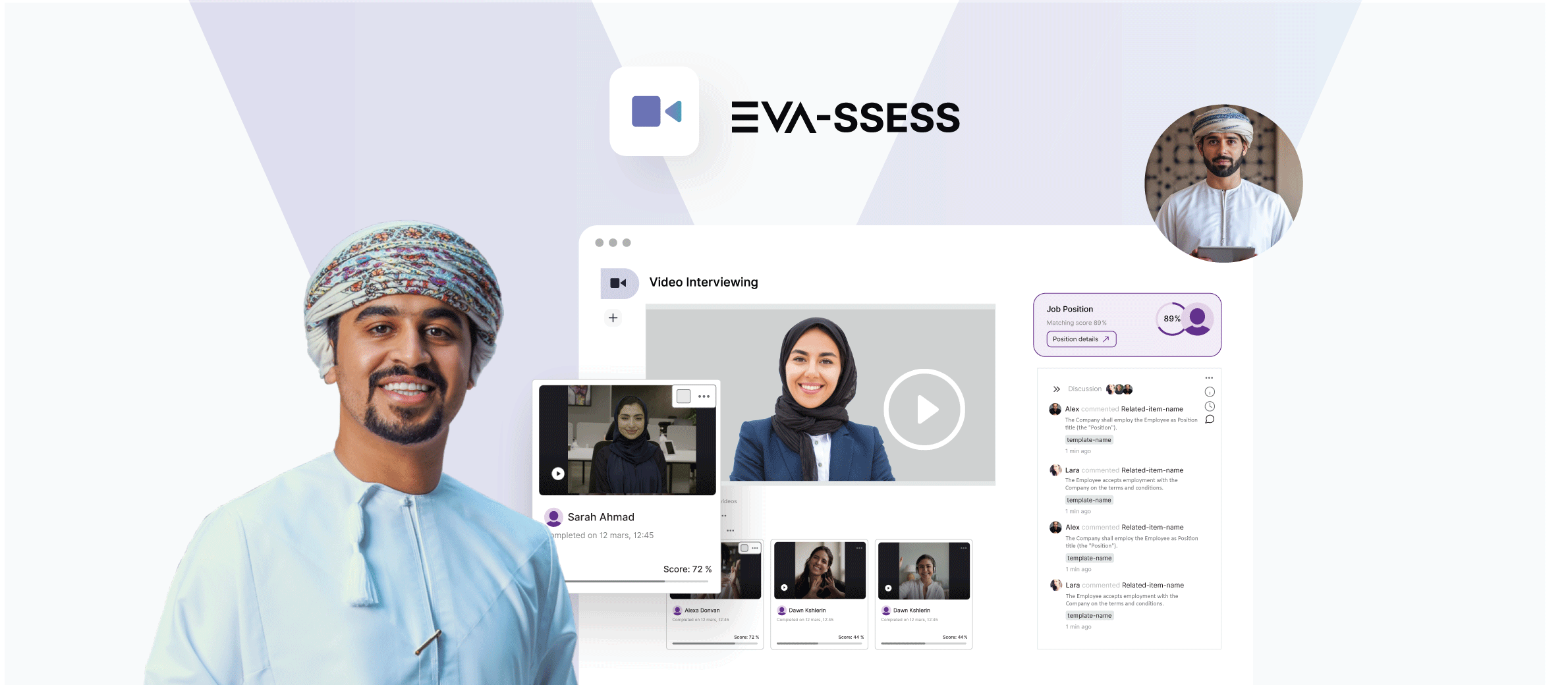
Structured video assessment. Candidates complete a structured video interview, and the system scores responses against a consistent rubric rather than waiting for a hiring manager to watch and rate every recording. This is the kind of capability behind agentic AI video assessment software by Elevatus, where the scoring step happens autonomously and only borderline or flagged candidates route back to a human reviewer.
Interview scheduling without the email chain. Once a candidate clears screening, the agent finds a mutual time across the hiring panel’s calendars and books it, closing a step that used to take three to five email exchanges and multiple days.
Requisition-to-shortlist continuity. The most mature deployments chain all of this together: a requisition opens, candidates are sourced and screened, top matches are assessed, and a ranked, interview-ready shortlist lands in the recruiter’s queue, with the recruiter approving the final interview slate rather than assembling it. This is the practical meaning of agentic AI recruiting software by Elevatus: the system carries the requisition from first sourcing signal to a decision-ready shortlist, and a person makes the call from there.
Onboarding continuity. Once an offer is accepted, agentic systems increasingly carry the handoff into onboarding software by Elevatus automatically, triggering document collection, compliance checks, and day-one scheduling without a separate manual kickoff. For a closer look at what separates these systems from simple automation, see these real examples of agentic AI in HR.
At enterprise scale, this isn’t a marginal efficiency gain. Elevatus’s agentic AI has powered 56 billion AI matching decisions and 2 million+ video interviews across its client base, numbers that are only possible because the matching and scoring steps run without a person in the loop on every single case.
Elevatus’s agentic AI has completed 56 billion AI matching decisions and scored more than 2 million video interviews, a volume achievable only because ranking and scoring run autonomously rather than requiring manual review at every step.
Ready to see what an autonomous, end-to-end hiring workflow looks like against your own requisition volume? Request a demo and walk through it with your own role criteria.
What HR Leaders Get Wrong About Agentic AI

The most common mistake isn’t technical. It’s assuming agentic AI is a switch you flip, rather than a governance model you design.
Treating “autonomous” as “unsupervised.” Autonomous means the system executes steps without being re-prompted at each one. It does not mean nobody is watching. Every serious agentic deployment defines checkpoints: which decisions the system makes on its own, which ones route to a human, and what triggers an escalation. Skipping this step is how organizations end up with a system nobody can explain a decision from six months later.
Assuming human-in-the-loop is all-or-nothing. Some HR leaders think the choice is between full automation and a human reviewing everything. In practice, mature deployments place the human at specific decision points, typically the final interview decision and any candidate flagged as an edge case, while letting the system handle sourcing, screening, and scheduling without supervision. Human-in-the-loop is a design choice about where, not a binary about whether.
Under-investing in the audit trail. If a rejected candidate later challenges a hiring decision, “the AI decided” is not a defensible answer on its own. What holds up is a logged, reviewable record of the criteria the system applied and the checkpoints a human confirmed. Governance isn’t a compliance afterthought here, it’s the thing that makes autonomous decisioning defensible at all.
Ignoring bias drift. A model trained or tuned against historical hiring data can quietly encode the biases in that history. Agentic systems that act autonomously compound this faster than task-based tools, because a biased ranking step affects every candidate that flows through it, not just the one output a person happened to review. Regular criteria audits aren’t optional once a system is making decisions rather than suggestions.
Not telling recruiters what changed. Recruiters who don’t know which decisions the system now owns tend to either distrust it entirely or defer to it blindly, neither of which is the intended outcome. The organizations that get the most value are explicit with their teams: here is what the system decides, here is what still comes to you, here is how to override it.
The future of hiring is human, amplified.
Elevatus combines agentic AI with enterprise-grade governance so your teams make faster, smarter decisions at every stage of recruitment.
Request a free demoHow to Roll Out Agentic AI Without the Usual Risk

Moving from a limited pilot to production-grade agentic AI in HR follows a consistent pattern across the enterprises that have done it well.
- Start with one bounded workflow. Pick a single, well-defined process, high-volume screening is the most common starting point, rather than trying to automate the entire requisition-to-hire journey at once.
- Define the checkpoints before switching anything on. Decide in writing which steps the system executes autonomously and which ones require human sign-off, before the first candidate goes through the workflow.
- Run parallel for a defined window. Let the agentic workflow run alongside the existing manual process for a set period, comparing outcomes before fully cutting over, rather than trusting the system on day one.
- Build the audit trail into the rollout, not after it. Logging and explainability should be part of the initial configuration, not something added once a decision gets questioned.
- Expand workflow by workflow. Once one process is stable and governed, extend the same model to the next, sourcing to screening, screening to scheduling, screening to onboarding handoff, rather than expanding scope and workflow count at the same time.
- Review criteria on a fixed cadence. Set a recurring review of the ranking and screening criteria the system applies, not a one-time audit at launch.
Elevatus’s agentic AI is built to deploy 94% faster than the 8.2-month industry average, which matters most in this phase: enterprises that can pilot, review, and expand quickly get to a defensible, production-grade workflow in weeks rather than absorbing a year of integration risk before they see whether the model earns their trust.
If you’re scoping what a production rollout would look like against your own hiring volume and compliance requirements, see Elevatus’s enterprise hiring infrastructure in action and talk through the governance model with the team.
FAQ
What is the difference between AI and agentic AI?
The difference between AI and agentic AI is that traditional AI in HR completes a single task when a person asks it to, such as drafting a job description or answering a chatbot query, while agentic AI plans and executes a multi-step sequence on its own, such as sourcing, screening, ranking, and scheduling a shortlist of candidates, checking in with a human only at the decision points that need one.
What are the benefits of AI in HR?
The benefits of AI in HR include:
- Faster time-to-hire, because repetitive screening and scheduling work no longer waits on a person’s calendar
- More consistent candidate evaluation, because the same criteria get applied to every candidate
- Better use of recruiter time, because agentic systems absorb the administrative load and leave recruiters with decision-making and candidate relationships
- Clearer audit trails, because every automated step is logged and reviewable rather than living in someone’s inbox
What are the challenges of AI in HR?
The challenges of AI in HR include:
- Governance gaps, when nobody has clearly defined which decisions the system is trusted to make on its own
- Unclear accountability, when a hiring outcome is later questioned and there is no reviewable record of how the decision was reached
- Bias risk, if the underlying data or ranking criteria are not audited on a regular cadence
- Cultural resistance, when recruiters are not told which parts of the process the AI now owns and which parts still come to them
How is AI currently being used in HR?
AI is currently being used in HR to source and rank candidates against defined role criteria, run and score structured video assessments, schedule interviews without manual back-and-forth, generate job descriptions and interview questions, flag skills gaps across a workforce, and, in more mature deployments, move a qualified candidate to the next hiring stage without a recruiter manually approving each individual step.
Turn top talent to employees fast
Hire, assess, onboard and manage top talent for every job. See how Elevatus streamlines everything; from acquire to new hire.
Request a demoAuthor
Kiran Kazim is a Senior SEO Content Specialist at Elevatus with more than eight years of experience writing about HR and technology. With a background in HR, she writes about talent acquisition, recruitment technology and workforce compliance in the GCC, using primary sources such as official government guidance and platform data.
Don't miss a thing!
Stay one step ahead. Subscribe and get the latest updates, news, and insights from Elevatus straight to your inbox.